


By the 3 p.m. meeting your eyes feel sandy, and by five you’re rubbing them between emails. Somewhere in there the thought lands: maybe I’m just not drinking enough water.
Half-right instinct. Tears are mostly water, so hydration isn’t irrelevant — but drinking more won’t, on its own, fix dry eyes. Here’s what the research actually supports, and what to check before you blame your water bottle.
At a glance
- One study found people with dry eye were also less hydrated — but it was a snapshot, not proof that drinking more water fixes dry eyes.
- The bigger levers sit on your desk: staring at screens (which cuts blinking to less than half), AC vents, and contact lenses.
- Bundle the fixes — water, a humidifier, 20-20-20, deliberate blinks. Pain or blurry vision means an eye doctor, not a bigger water bottle.
What the research actually says
The “dry body, dry eyes” hypothesis has been tested. A cross-sectional study of 111 hospital patients (average age 77) found that people classified with dry eye had higher plasma osmolality — in plain terms, their whole bodies were running lower on water.
It’s a real finding, and a narrow one. A snapshot of older hospital patients, it shows dry eye and low hydration travel together — not that one causes the other — and no trial has shown that drinking more water treats dry eye. For what it’s worth, the National Eye Institute does put “drink plenty of water” on its dry-eye self-care list, alongside humidifiers, screen breaks, and avoiding smoke, wind, and air conditioning. Water is on the team. It just isn’t the star.
Audit your desk before your water bottle
Most everyday dry eye is manufactured at a desk. Start with the screen: when you stare at one, your blink rate falls to less than half — an observation reported as far back as a 1993 letter in the New England Journal of Medicine. Blinking is the wiper that respreads tears across your eye. Staring switches the wiper off.
Then the air. An AC vent aimed at your face — or heating that has wrung the office dry, the winter dryness problem relocated to your cornea — speeds up how fast your tear film evaporates. Contact lenses destabilize it further. Run down the list:
| Check | Why it dries your eyes | What to change today |
|---|---|---|
| Screen staring | Blink rate drops to less than half | Every 20 minutes, look 20 feet away for 20 seconds — plus a few slow, full blinks |
| AC and heater vents | Faster tear evaporation | Angle the vent away from your face; run a humidifier |
| Contact lenses | A less stable tear film | Shorter wearing times; give your eyes a glasses day or two each week |
| Monitor height | Looking up opens the eye wider, exposing more surface | Top of the screen at or slightly below eye level |
| Your water pattern | Low hydration means less raw material for tears | Hit your by-weight total, spread through the day |
The bundle that works (and where eye drops fit)
No single fix carries this, so bundle them: steady water, moister air, deliberate blinks. Artificial tears aren’t an admission of defeat either — the NEI calls them the most common treatment for mild dry eye. The useful signal is frequency: reaching for drops all day long isn’t a cue to buy more, it’s a cue to find the cause.
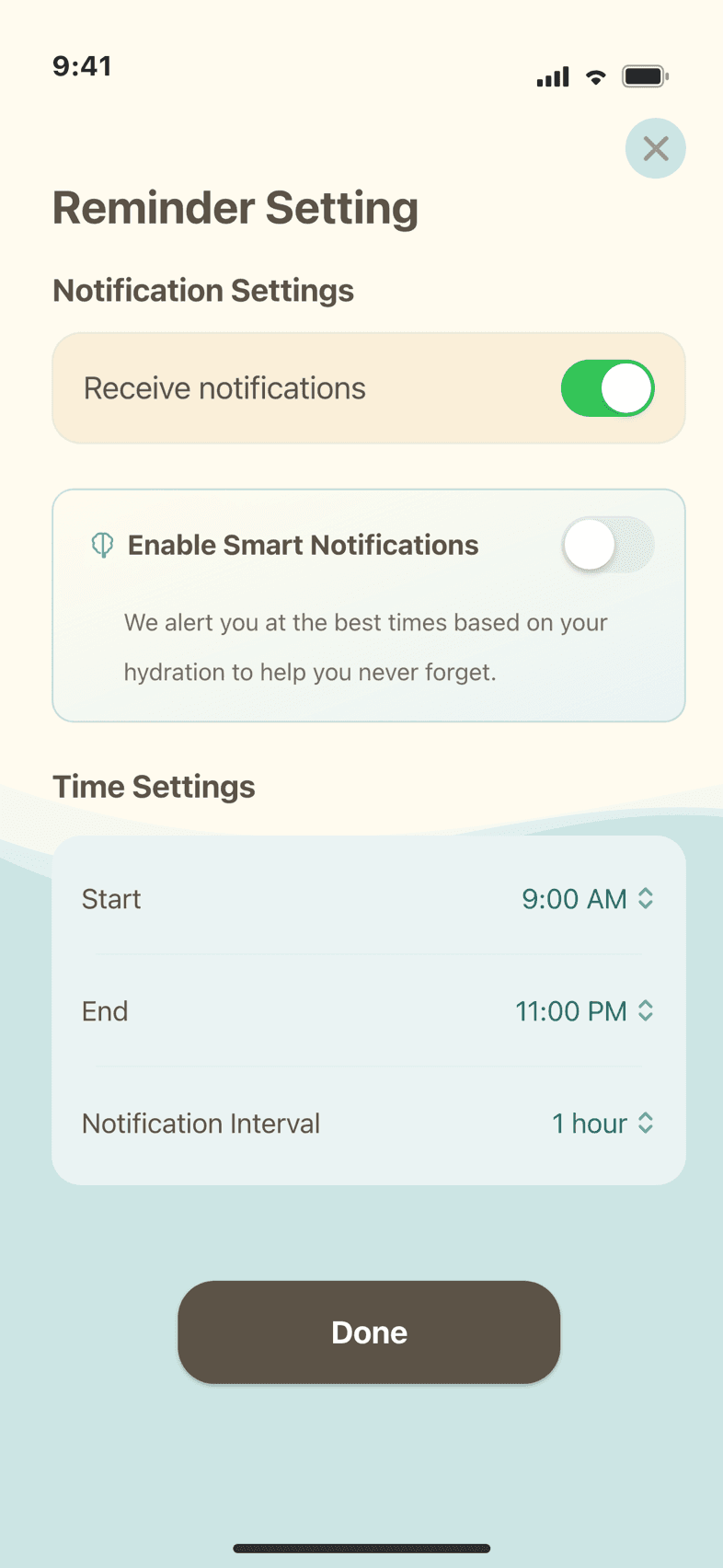
One reminder can carry two habits. When a WOOMOOL water nudge lands: a sip, twenty seconds looking out the window, two slow blinks. Your hydration goal and your eyes end up on the same clock. And if you’re curious what else low water does to you, the dehydration signs guide covers the rest of the body.
Frequently asked questions
- Can dehydration cause dry eyes?
- It can contribute. One study found people with dry eye were measurably less hydrated — but it was a snapshot, and nobody has shown that drinking more water, by itself, treats dry eye. Treat water as the floor, not the fix.
- How much water should I drink for dry eyes?
- There’s no eye-specific number. The NEI’s general suggestion is 8 to 10 glasses a day; a by-weight estimate is more personal. Steady beats heroic — your tear film can’t bank a chugged liter.
- Do artificial tears make your eyes dependent?
- Basic lubricating drops don’t create dependence. Preservatives can irritate with heavy use, which is why preservative-free single-use vials exist. If you need drops constantly for weeks, the question isn’t the drops — see an eye doctor about the cause.
How this guide was made
Written by the WOOMOOL editorial team. Every figure and claim was checked against the primary source linked in that paragraph (PubMed, MedlinePlus, NASEM, and similar); where the evidence is thin, we say so rather than overstate it. Drafts were written with the help of AI tools and fact-checked by a person before publishing.
This is general information, not medical advice or diagnosis. If you are pregnant, have a kidney or heart condition, or take medication, your doctor or pharmacist comes before anything here.